Napa Valley
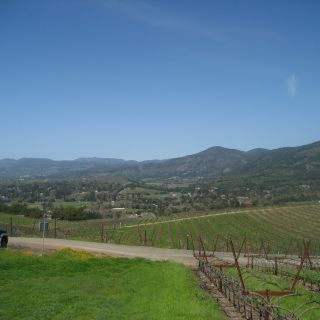
The transformation that has occurred in this small rift of land above San Francisco bay that is barely 30 miles long is intense, from a quiet farming community with stands of nut trees and plum orchards to a giant in terms of wine quality, power, tourism and fame. Napa is now synonymous with the great wine regions of the world, a player on the world stage with real estate values soaring past tens of thousands of dollars per acre. The most amazing part is how quickly all this has happened. Only 40 years ago Robert Mondavi joined pioneers such as Inglenook and Chateau Montelena in harvesting grapes in Napa. Quite a short period of time when compared to the fame that Bordeaux, Burgundy, et al. built over the centuries.
By both size and volume, Napa cannot compete with other regions in California. Smaller in size than Sonoma to the west, Napa produces less than 5% of all the grapes in California. But the quality is where she really shines. The combination of warm days tempered by high elevations and the cooling winds that travel up the valley from San Francisco Bay has created a Garden of Eden for grape growing. Numerous soil types exist, but overall the valley has been a hotbed for Chardonnay, Cabernet Sauvignon, Merlot, Sauvignon Blanc and to a lesser extent Italian varietals, Zinfandel, Pinot Noir and the other noble Bordeaux grapes.
Napa Valley is divided into many sub-appellations, including: Atlas Peak, Chiles Valley, Diamond Mountain, Howell Mountain, Los Carneros, Oak Knoll District, Oakville, Rutherford, Spring Mountain, Stags' Leap, Wild Horse Valley and Yountville.
Location
United States → California → Napa County
Appellation Type
American AVA
Wineries (94)
Alpha Omega
Altamura
Arietta
Artesa Reserve Cabernet
August Briggs Winery
Beringer
Black Bart
Bookster
Bridesmaid Wines
Bryant Family Cabernet
Caldwell
Caldwell Vineyards
Castello de Amorosa
Caymus Vineyards
Caymus Vineyards Special Selection
Chappellet
Charles Krug
Chase Cellars
Clos du Val
Clos Pegase
Cloud View Vineyards
Crystal Valley Cellars
Dalla Valle
Darioush
Del Dotto
Del Dotto Caves
Domaine Carneros
Dominus
Duckhorn
Ehlers Estate
Flora
Forman
Francis Coppola
Franciscan
Frank Family Vineyards
Freemark Abbey
Frog's Leap
Glass Mountain
Grgich Hills
Heitz Cellar
Hendry
Honig
Inglenook
Jarvis
Jlohr
Joel Gott
Jones Family Vineyards
Joseph Phelps
Kongsgaard
Kuleto Estate
Lang and Reed
Liparita Cellars
Long Vineyards
Louis M. Martini
Louis Martini
Luna
Mason Cellars
Merryvale
Miner
Mumm Napa
Napa Cellars
Orin Swift
Orin Swift "The Prisoner" Zinfandel blend
Orin Swift Cellars
Pahlmeyer
Palmeri
Peju Province
Peter Franus
Raymond Winery
Redmon
Ristow Estate
Robert Biale Vineyards
Robert Foley
Robert Mondavi Winery
Robert Pecota Winery
Rothschild Brothers of California
Rutherford Hill
Screw Kappa Napa
Selene
Shafer
Spring Mountain
St. Clement Winery
St. Supéry
Stags Leap Wine Cellars
Stags' Leap Wine Cellars
Steltzner Vineyards
Sterling Vineyards
Summit Lake Vineyards
Titus
Turnbull
Twenty Bench
Veraison Winery
William Hill Winery
ZD Wines